
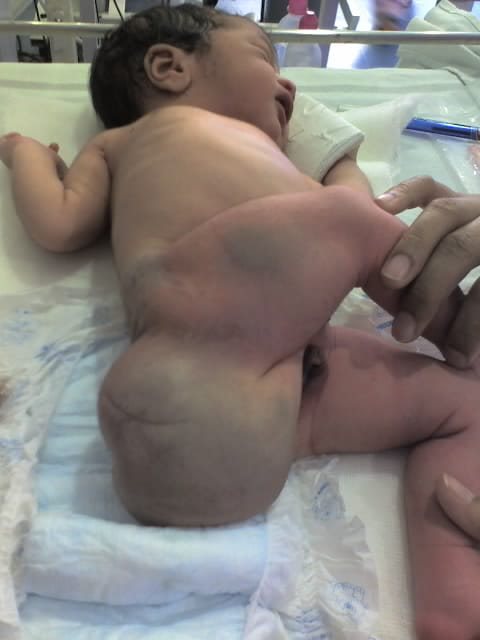
What is sacrococcygeal teratoma (SCT)
Sacrococcygeal teratoma (SCT) is a tumour that develops before birth and grows from a baby's coccyx — more commonly known as the tailbone. It is the most common tumour found in newborns, occurring in 1 out of every 35,000 to 40,000 live births.
The tumour is usually covered with skin, but may be covered by a thin, transparent tissue called a membrane. Most tumours have many blood vessels coming through them. They come in many different sizes, and sometimes they may grow outward from the back or toward your child's stomach.
Diagnosis
The signs and symptoms of sacrococcygeal teratoma depend largely on the size and location of the tumour. Some tumours can be diagnosed by ultrasound before your child is born. An abnormally sized uterus is typically the first sign that your baby may have a tumour. The size discrepancy can be due to a massive tumour or to polyhydramnios (excess amniotic fluid).
Treatment
Treatment for SCT involves surgery to remove the tumour.
Long-term outlook
Most foetal sacrococcygeal teratomas are not likely to be malignant, and the prognosis tends to be good after resection.