
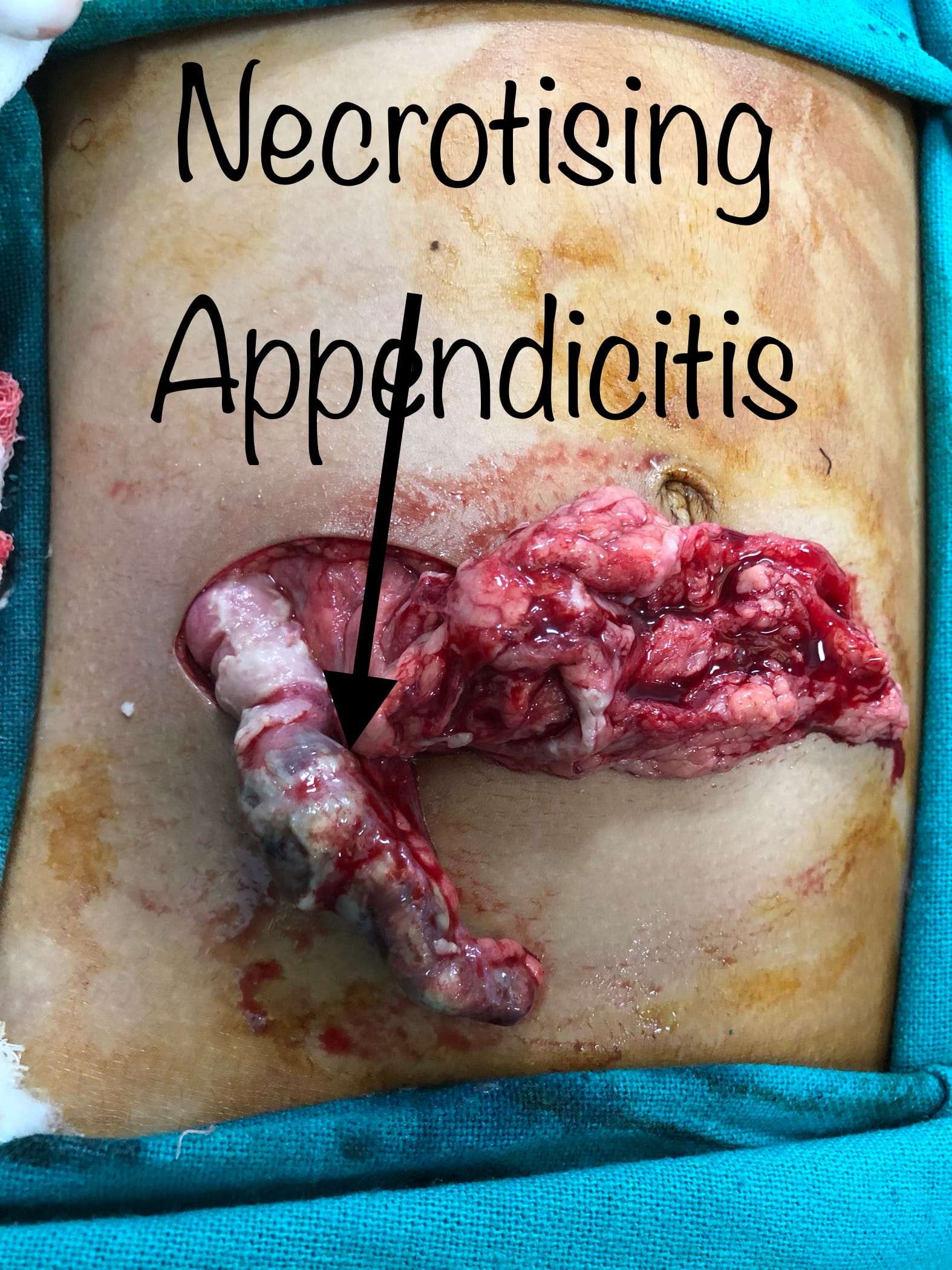
What Is Appendicitis?
The appendix is a small organ attached to the large intestine in the lower right side of the belly. When it gets infected, it's called appendicitis.
Appendicitis is an emergency. It's important to know what to look for and get medical care right away.
What Are the Signs & Symptoms?
The first signs of appendicitis are often a mild fever and pain around the navel. It might seem like just a stomach-ache. But with appendicitis, the pain usually gets worse and moves to the lower right side of the tummy.
If your child has tummy pain, be on the lookout for these signs of appendicitis:
- strong pain, mainly around the navel or in the lower right part of the tummy (the pain might come and go at first, then grow steady and intense)
- low-grade fever
- loss of appetite
- nausea (feeling sick) and vomiting (throwing up)
- diarrhoea (especially small amounts, with mucus)
- distended tummy
If pain spreads across the tummy, it may mean the appendix has burst. Doctors call this ruptured appendicitis, and it's serious. A high fever reaching 104°F is another sign of a burst appendix.
Call your doctor right away if you think your child has appendicitis. The sooner it's caught, the easier it will be to treat.
What Problems Can Happen?
If an infected appendix isn't removed, it has the potential to burst about 48 to 72 hours after symptoms first start. This can spread bacteria inside the body. The infection might form a large collection of pus (an abscess) or spread throughout the belly.
Who Gets Appendicitis?
Appendicitis mostly affects kids and teens between 4 and 20 years old. It is rare in infants.
What Causes Appendicitis?
When the appendix gets blocked, too much bacteria can grow and cause an infection. Some of the things that might block the appendix are:
- hard, rock-like stool (appendicolith)
- swollen lymph nodes in the intestines
How Is it Diagnosed?
The symptoms of appendicitis can be a lot like those of other medical problems (like kidney stones, pneumonia, or a urinary tract infection). So it can be a challenge for doctors to diagnose.
To find out if a child has appendicitis, a doctor will examine the tummy for signs of pain and tenderness. The doctor will order blood tests and urine tests. Some kids also get an X-ray of the abdomen and chest, an ultrasound, or a CAT scan.
The medical team may tell you not to give your child any food or drink. This is in case your child needs surgery.
How Is It Treated?
A surgeon will operate to take out the infected appendix. This is called an appendicectomy. Most of the time, surgeons use a small device called a laparoscope to remove the appendix through a few small cuts on the tummy. Kids who get this surgery usually stay in the hospital for 2-3 days.
The care team may give your child intravenous (IV) fluids and antibiotics before and after surgery.
A child who had a burst appendix might need to stay in the hospital longer after an appendicectomy. That gives the antibiotics time to kill any bacteria that spread into the body.