
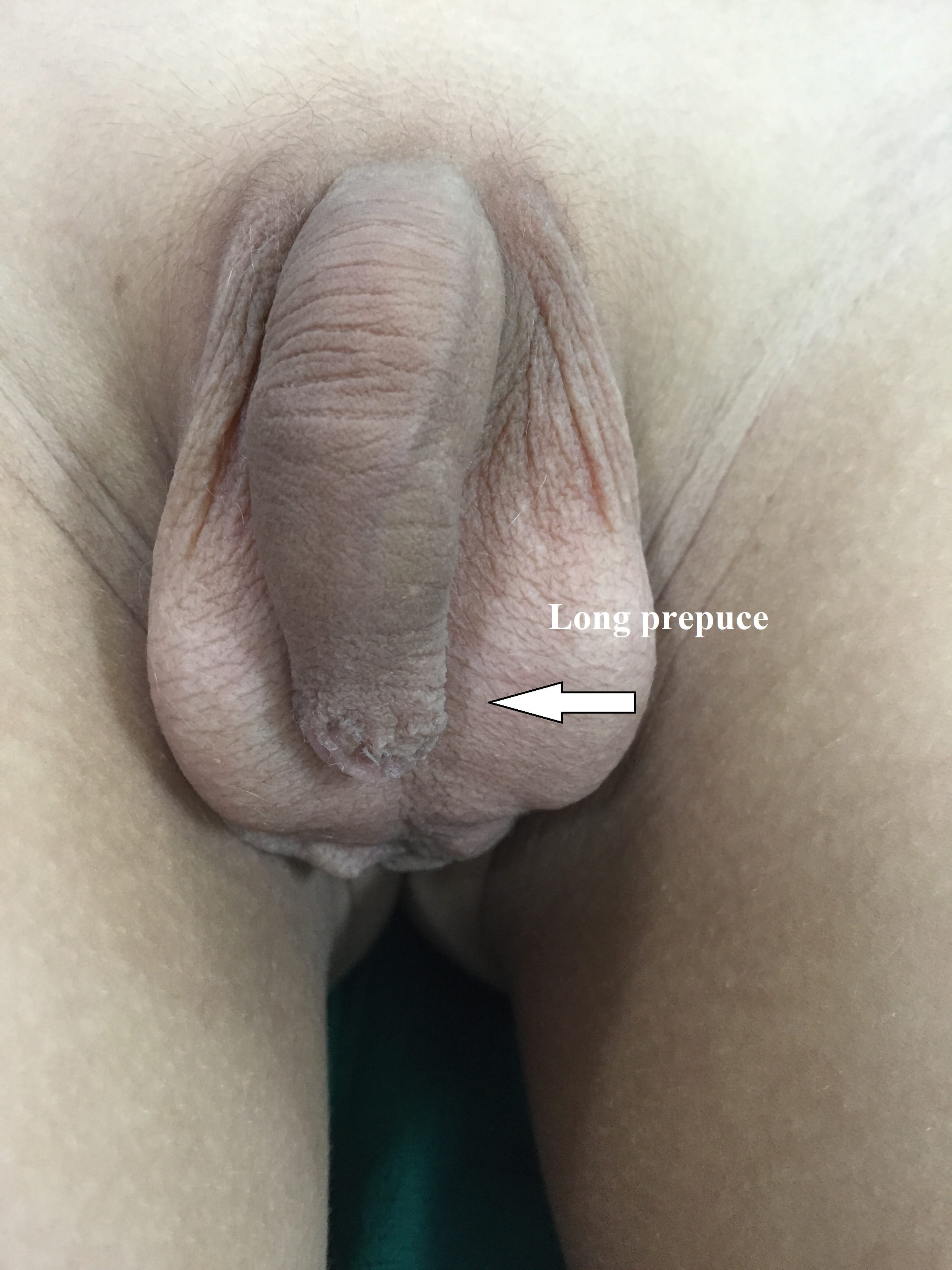
What is Phimosis?
Phimosis is defined as the inability to pull the skin backwards (foreskin or prepuce) covering the head (glans) of the penis. Phimosis may appear as a tight ring of foreskin around the tip of the penis, preventing full retraction. Phimosis is divided into two forms: physiological and pathological.
Physiological phimosis: Children are
born with tight foreskin at birth and separation occurs
naturally over time. Phimosis is normal for the
uncircumcised infant/child and usually resolves around
5-7 years of age, however the child may be older.
Pathological phimosis:
Phimosis that occurs due to scarring, infection or
inflammation. Forceful foreskin retraction can lead to
bleeding, scarring, and psychological trauma for the
child and parent. If there is ballooning of the foreskin
during urination, difficulty with urination, or
infection, then treatment may be warranted.
How is phimosis treated?
Treatments for phimosis vary depending on the child and severity of phimosis. Treatments may include: gentle daily manual retraction, topical corticosteroid ointment application or Preputioplasty / circumcision.
-
Preputioplasty
Preputioplasty is a surgical procedure that releases the tight bands of the prepuce without removing the prepuce. Preputioplasty is an alternative to circumcision. It is a surgical procedure that saves the foreskin instead of removing it.
-
Circumcision
Male circumcision refers to the surgical removal of the foreskin. Circumcision is often not required for treatment of phimosis. In some rare cases your paediatric surgeon may recommend circumcision due to failure of steroid ointment, pathologic phimosis, paraphimosis (foreskin stuck in the retracted position behind the head of the penis), recurrent urinary tract infections, or severe/recurrent balanoposthitis.
How is phimosis diagnosed and evaluated?
In physiologic phimosis, benign (non-life threatening) conditions may occur that are common in uncircumcised males, including; cysts related to smegma production/trapping and transient painless ballooning of the foreskin during urination. These are considered normal variations that usually resolve with daily gentle manual retraction.
Pathologic phimosis that does not resolve naturally or causes other complications, including; penile irritation or bleeding, ballooning of the foreskin with urination resulting in forceful or difficult urination, urinary retention, painful urination (dysuria), painful erections, recurrent infections of the foreskin (balanoposthitis), paraphimosis (foreskin stuck in the retracted position behind the head of the penis), or urinary tract infections may require further treatment.
Care of Uncircumcised Penis
No special care is required for foreskin in infancy. The foreskin should not be forcibly retracted, however gentle retraction is okay. In the first few years of life, gentle retraction with cleansing underneath the foreskin is sufficient during bathing and will result in progressive retraction over time. Once the child is older and the foreskin retracts fully, he will learn to retract, cleanse and dry underneath the foreskin as part of his hygiene routine. After retraction, the foreskin should be pulled back over the head of the penis and returned to the normal position.
Smegma
Smegma is a collection of skin cells from the glans penis and inner foreskin that is often noted with retraction of the foreskin. This natural skin shedding helps to separate the foreskin from the head of the penis. Smegma may appear as white cheese underneath the skin, which can easily be washed off once the foreskin is retracted.