
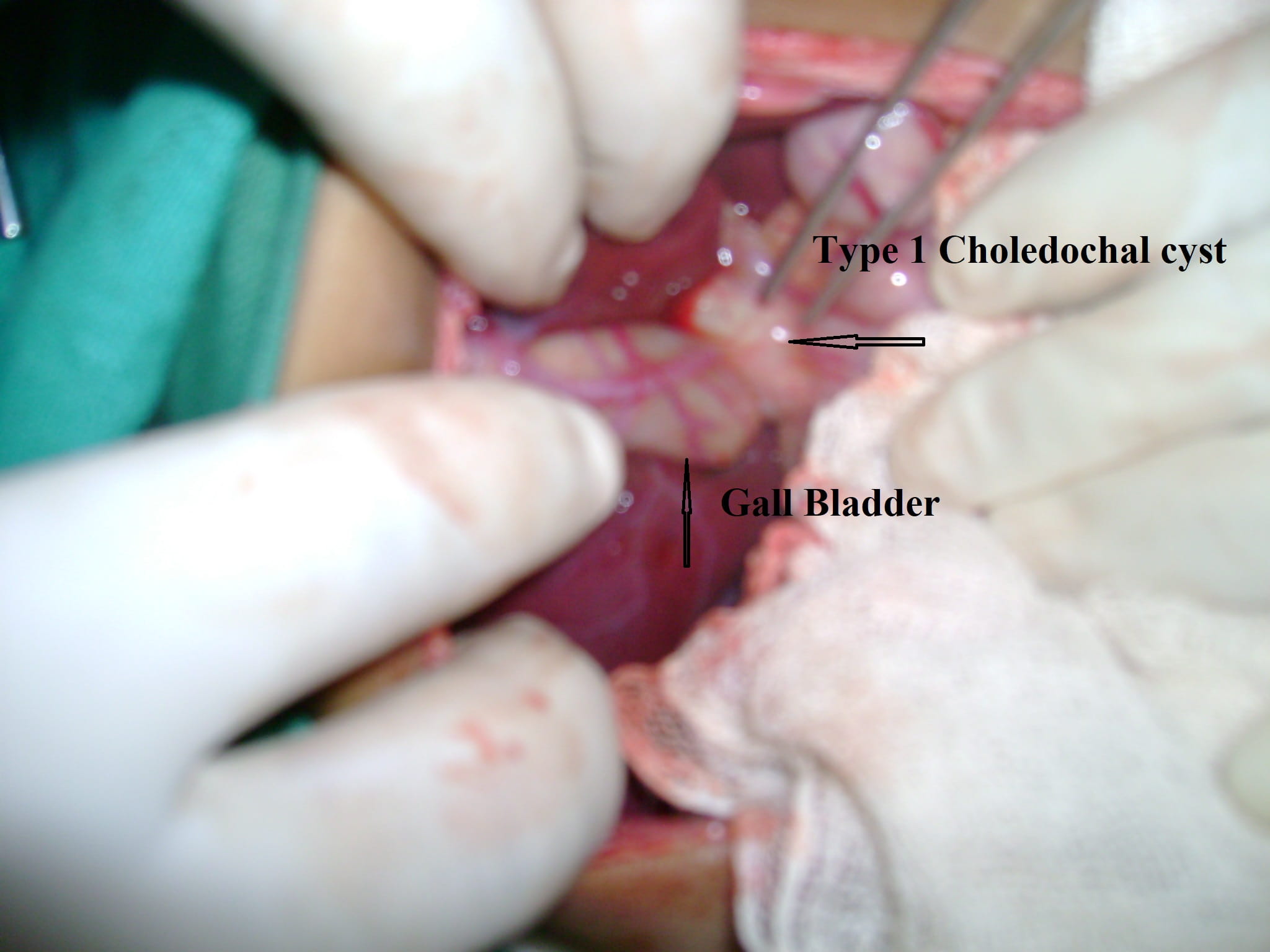
What is choledochal cyst?
Choledochal cyst is a problem with the tubes (ducts) that carry bile from your child’s liver to their gallbladder and intestine. The tubes get bigger than normal (dilate) or pouches form on the tubes. This keeps bile from flowing well, which can cause liver problems.
Bile is a liquid that helps the body break down (digest) fats. Normally, bile flows through tiny bile ducts within the liver into larger ducts. Then bile leaves the liver through 2 main ducts. Outside the liver, these ducts join to form the common bile duct.
The common bile duct connects the liver to the gallbladder and the gallbladder to the small intestine. The gallbladder stores bile until the body needs it to digest food. Food triggers the gallbladder to contract and squeeze bile out into the intestine.
Cysts can block the flow of bile. When bile doesn’t flow well, the bile ducts can get swollen and irritated (inflamed) or infected. This is called cholangitis. Over time, it can cause scars in the liver (cirrhosis). Then the liver cannot work well. Children with choledochal cysts may also get an inflamed pancreas (pancreatitis).
Choledochal cyst in children
Choledochal cyst is present at birth (congenital). It happens while a baby is forming, before they are born.
Risks of choledochal cyst
People who have had choledochal cysts have a higher chance of getting cancer of their bile ducts (cholangiocarcinoma). This mainly affects adults with cysts because they have had their cysts for many years. The chance of getting cancer is much lower if cysts are removed early in life.
Symptoms
Some newborns with cysts have symptoms right away. Others have good bile flow at first, but they get symptoms soon after birth. Some children don’t have symptoms for a couple of years or longer. Some people live with a choledochal cyst for many years but don’t know about it because they don’t have symptoms until they are an adult.
Babies or children with a choledochal cyst may have these symptoms:
- Yellow colour to the eyes and skin (jaundice)
- Pain in the upper-right belly (upper-right-quadrant pain)
- Soft mass that can be felt in the upper-right belly
- Pale or clay-coloured stools (faeces)
- Fever, if they have an infection (cholangitis)
- If they have an inflamed pancreas (pancreatitis): belly pain that may come and go, nausea and vomiting
Diagnosis
- Prenatal ultrasound
- Exam and lab tests
- Imaging
Treatment
The treatment for a choledochal cyst is surgery. The purpose is to remove the cyst and create good bile flow from the liver to the small intestine.