
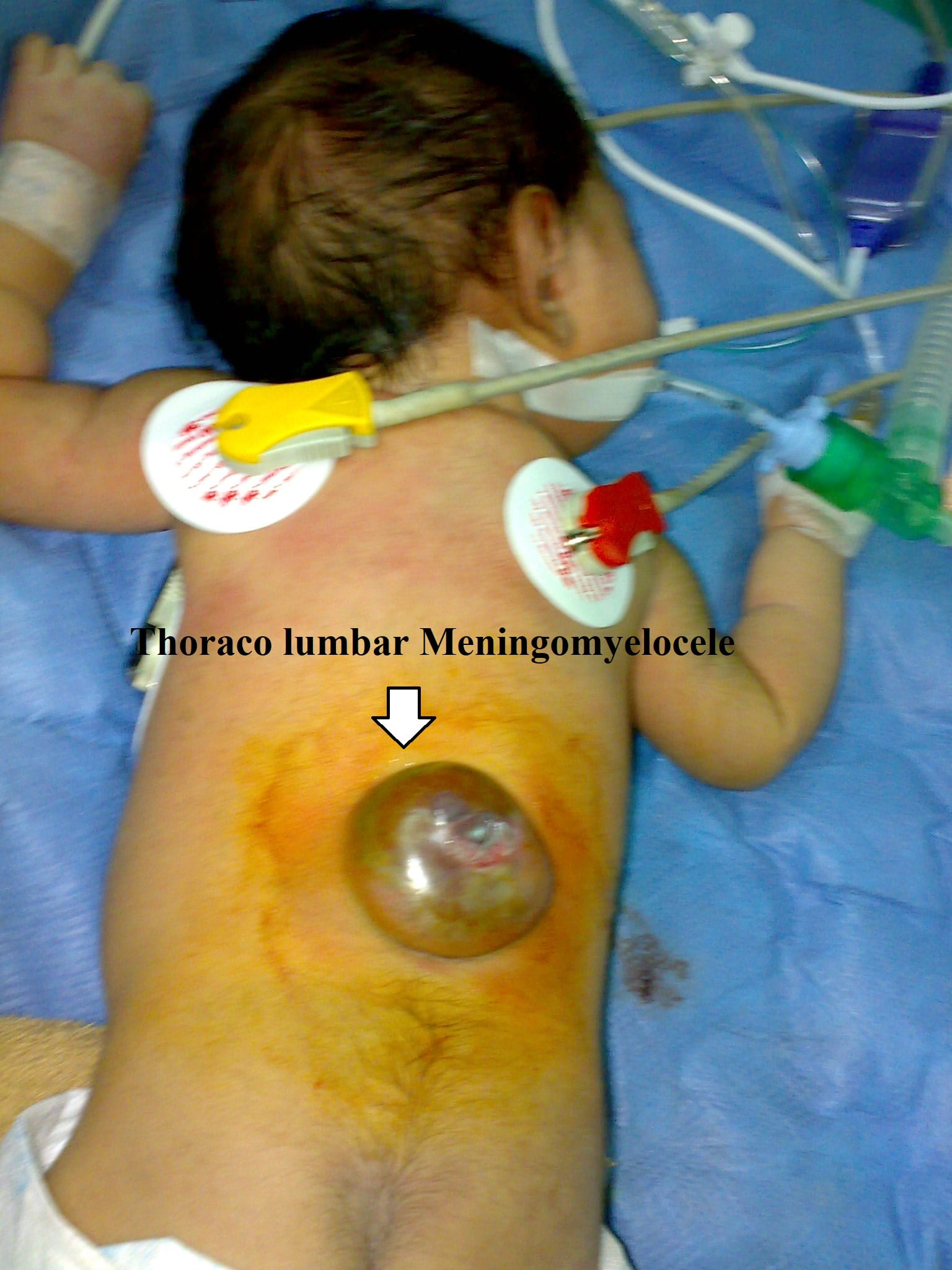
What is a myelomeningocele?
A myelomeningocele is a defect of the backbone (spine) and spinal cord. Before birth, the baby’s spine, the spinal cord and the spinal canal do not form or close normally.
A myelomeningocele is the most serious form of spina bifida.
In babies with myelomeningocele:
- The bones of the spine (vertebrae) do not form the normal way.
- A small sac extends through an opening in the spine. A membrane covers the sac.
- The sac holds cerebrospinal fluid (CSF) and tissues that protect the spinal cord (meninges).
- The sac may also contain parts of the spinal cord and nerves.
Sometimes the sac opens up. It can open because of normal movements of your baby, either before or during birth.
A myelomeningocele can happen anywhere along the spinal cord. It is most common in the lower back (lumbar and sacral areas). There is nerve damage below the level of the myelomeningocele. As a result of the nerve damage, babies may have symptoms.
Myelomeningocele in Children
Myelomeningoceles are present when a child is born (congenital).
Doctors do not know exactly what causes myelomeningoceles. Evidence suggests genes may play a role, but the role is not strong. If a woman has 1 child with a myelomeningocele, there is a less than 6% chance that she will have other children with the condition.
We do know what can help prevent myelomeningoceles. Early in pregnancy, it is very important for women to get enough folic acid in their diets. This vitamin helps the baby’s neural tube develop properly. The neural tube develops into the baby’s brain and spinal cord. Neural tube defects like myelomeningocele have become less common as doctors have learned about the link with folic acid and as more women have taken folic acid supplements during pregnancy.
Symptoms
A baby with a myelomeningocele has a sac holding parts of the spinal cord sticking though their back. The baby may be missing function, like movement or sensation, below the level of the problem.
Myelomeningocele can cause symptoms that include:
- Problems moving parts of the body below the opening in the back
- Lack of sensation in their legs and feet
- Poor or no bowel and bladder control
- Twisted or abnormal legs and feet; for example, clubfoot
- Too much cerebrospinal fluid in the head (hydrocephalus)
- Problems with how the back of the brain formed (Chiari 2 malformation)
- Learning differences or delayed milestones (impaired cognitive development)
Diagnosis
The baby may have imaging tests that let doctors see the spine. They include:
- X-ray
- Ultrasound
- Computed tomography (CT) scan
- Magnetic resonance imaging (MRI)
Treatment
As children born with a myelomeningocele grow, they most likely will need treatment such as medicines and physical therapy. Some may need aids like braces, crutches or wheelchairs. Soon after birth, however, treatment for your baby is surgery.
Surgery for Myelomeningocele
Surgery is done as early as possible to:
- Limit the risk of infection
- Prevent more damage to the spinal cord
The surgery does not help your baby develop function that they were not born with.
Many babies with a myelomeningocele also have too much cerebrospinal fluid in their heads (hydrocephalus). If your baby has severe hydrocephalus at birth, they may need surgery -a long-term shunt when your baby is stable.
If your baby does not have hydrocephalus at birth, doctors wait to see if it develops later. If so, a shunt is placed at that time.
Not all babies with a myelomeningocele need a shunt. Most babies who need a shunt get it 4 to 8 weeks after birth.
Ongoing Care
Some children with myelomeningoceles have other conditions, like hydrocephalus, tethered spinal cord, Chiari malformation and syringomyelia, that need treatment.
Often, children with myelomeningoceles have other complex problems related to their nervous systems, such as problems with movement, lack of sensation, and lack of bowel and bladder control. These problems may require long-term care.
Each child is different, and we will tailor your child’s treatment to their needs.