
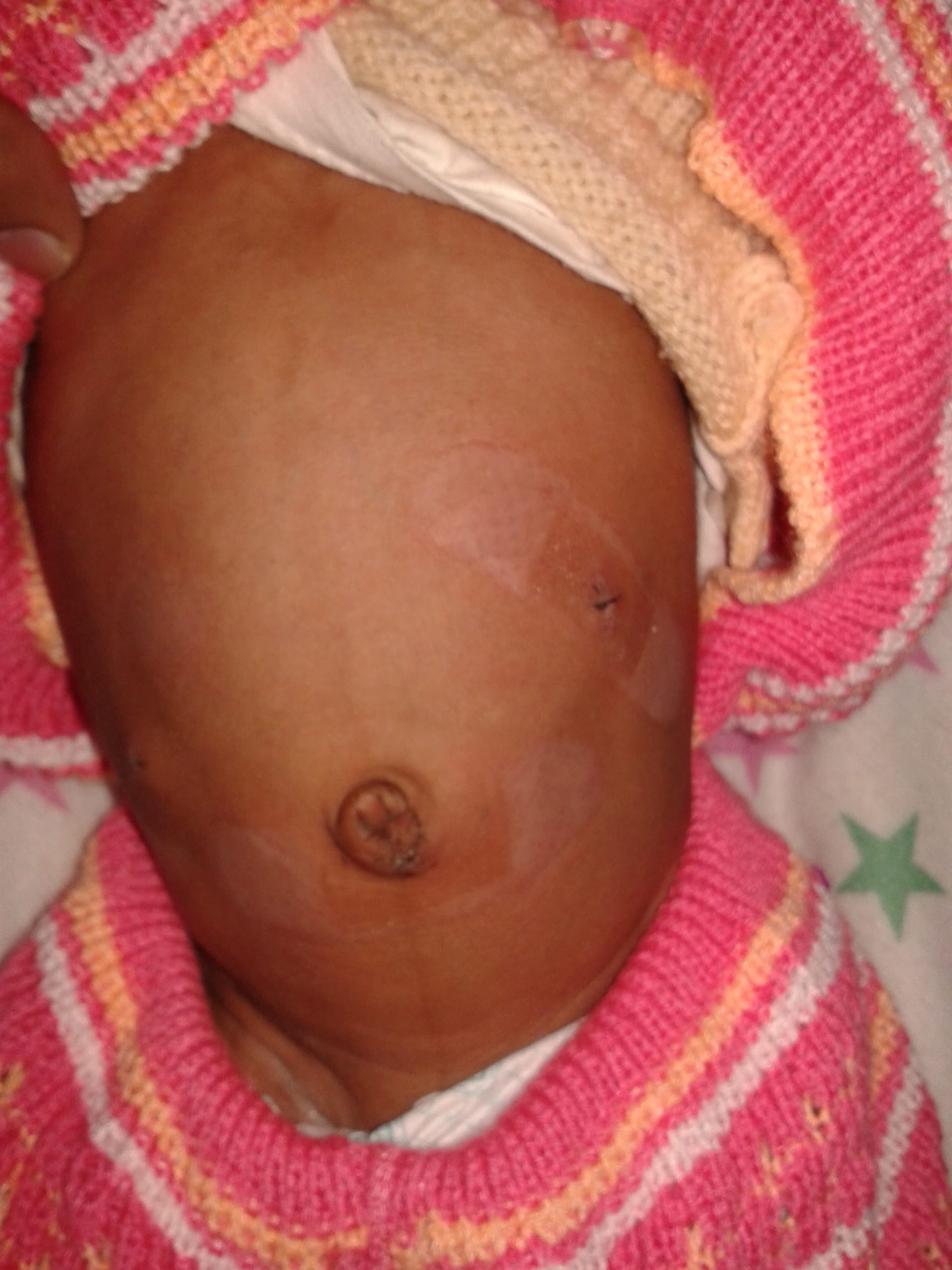
What Is Pyloric Stenosis?
Pyloric stenosis is an uncommon condition in infants that blocks feeds from entering the small intestine. In pyloric stenosis, the pylorus muscles thicken and become abnormally large, blocking food from reaching the small intestine. Pyloric stenosis can lead to forceful vomiting, dehydration and weight loss. Babies with pyloric stenosis may seem to be hungry all the time. Surgery cures pyloric stenosis.
Symptoms
Signs of pyloric stenosis usually appear within three to five weeks after birth. Pyloric stenosis is rare in babies older than age 3 months. Signs and symptoms include:
- Vomiting after feeding. The baby may vomit forcefully, ejecting breast milk or formula up to several feet away (projectile vomiting). Vomiting might be mild at first and gradually become more severe as the pylorus opening narrows. The vomit may sometimes contain blood.
- Persistent hunger. Babies who have pyloric stenosis often want to eat soon after vomiting.
- Stomach contractions. You may notice wave-like contractions (peristalsis) that ripple across your baby's upper abdomen soon after feeding, but before vomiting. This is caused by stomach muscles trying to force food through the narrowed pylorus.
- Dehydration. Your baby might cry without tears or become lethargic. You might find yourself changing fewer wet diapers or diapers that aren't as wet as you expect.
- Changes in bowel movements. Since pyloric stenosis prevents food from reaching the intestines, babies with this condition might be constipated.
- Weight problems. Pyloric stenosis can keep a baby from gaining weight, and sometimes can cause weight loss.
See your baby's doctor if your baby:
- Projectile vomits after feeding
- Seems less active or unusually irritable
- Urinates much less frequently or has noticeably fewer bowel movements
- Isn't gaining weight or is losing weight
Causes
The causes of pyloric stenosis are unknown, but genetic and environmental factors might play a role. Pyloric stenosis usually isn't present at birth and probably develops afterward.
Risk factors
Risk factors for pyloric stenosis include:
- Sex. Pyloric stenosis is seen more often in boys — especially firstborn children — than in girls.
- Premature birth. Pyloric stenosis is more common in babies born prematurely than in full-term babies.
- Bottle-feeding. Some studies suggest that bottle-feeding rather than breast-feeding can increase the risk of pyloric stenosis. Most people in these studies used formula rather than breast milk, so it isn't clear whether the increased risk is related to formula or the mechanism of bottle-feeding.
Complications
Pyloric stenosis can lead to:
- Failure to grow and develop.
- Dehydration. Frequent vomiting can cause dehydration and a mineral (electrolyte) imbalance. Electrolytes help regulate many vital functions.
- Stomach irritation. Repeated vomiting can irritate your baby's stomach and may cause mild bleeding.
- Jaundice. Rarely, a substance secreted by the liver (bilirubin) can build up, causing a yellowish discoloration of the skin and eyes.
Diagnosis
Your baby's doctor will start with a physical examination. Sometimes, the doctor can feel an olive-shaped lump — the enlarged pyloric muscle — when examining the baby's abdomen. The peristaltic waves in the baby's abdomen are another telltale sign of pyloric stenosis.
Your doctor might also recommend:
- Blood tests to check for dehydration or electrolyte imbalance or both
- Ultrasound to view the pylorus and confirm a diagnosis of pyloric stenosis
- X-rays of your baby's digestive system, if results of the ultrasound aren't clear
Treatment
Pyloromyotomy
Surgery is needed to treat pyloric stenosis. The procedure (pyloromyotomy) is often scheduled on the same day as the diagnosis. If your baby is dehydrated or has an electrolyte imbalance, he or she will have fluid replacement before surgery.
In pyloromyotomy, the surgeon cuts only through the outside layer of the thickened pylorus muscle, allowing the inner lining to bulge out. This opens a channel for food to pass through to the small intestine.
Pyloromyotomy is often done using minimally invasive surgery. A slender viewing instrument (laparoscope) is inserted through a small incision near the baby's navel. Recovery from a laparoscopic procedure is usually quicker than recovery from traditional surgery, and the procedure leaves a smaller scar.
After surgery:
- Your baby might be given intravenous fluids for a few hours or until he or she can eat. You can probably start feeding your baby again within 24 to 48 hours.
- Your baby might want to feed more often.
- Some vomiting may continue for a few days after surgery.
Potential complications from pyloric stenosis surgery include bleeding and infection. However, complications aren't common, and the results of surgery are generally excellent.