
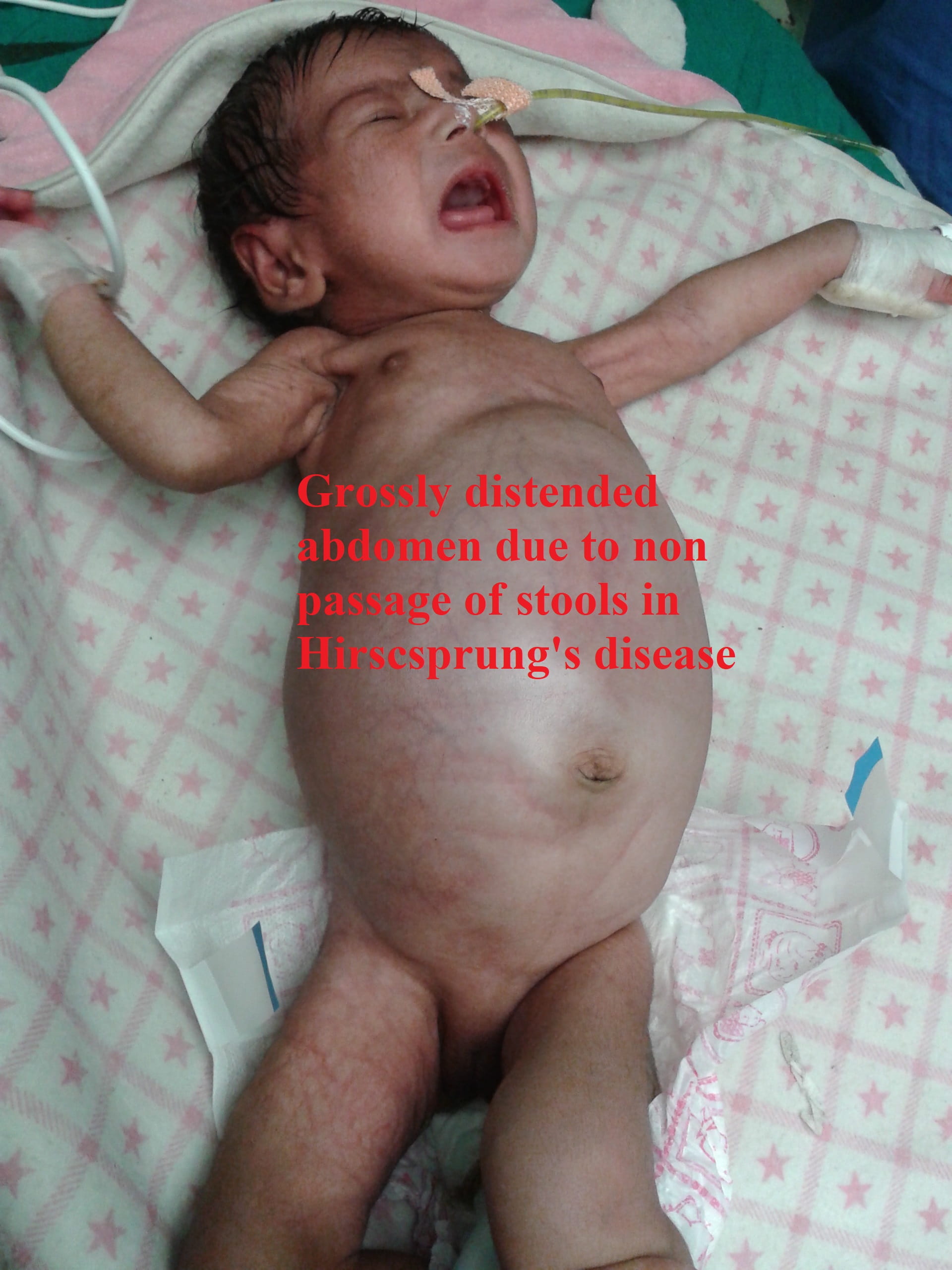
What Is Hirschsprung Disease?
Hirschsprung disease affects the large intestine (colon) of newborns, babies, and toddlers. It makes them have trouble emptying their bowels. Most of the time, the problems start at birth, although in milder cases symptoms may appear months or years later.
Treatment almost always requires surgery. Fortunately, most children who have surgery are fully cured and able to pass bowel movements (BMs) normally.
Hirschsprung disease can cause constipation, diarrhoea, and vomiting. Sometimes it leads to serious colon complications, like enterocolitis and toxic megacolon, which can be life-threatening. So it's important to diagnose and treat Hirschsprung disease as early as possible.
What Are the Signs & Symptoms?
The symptoms of Hirschsprung disease can vary depending on how severe it is. Children with severe cases usually will have symptoms within the first few days of life.
Newborns with Hirschsprung disease may:
- be unable to pass stool within the first or second day of life
- have a swollen belly, bloating, or gas
- have diarrhoea
- vomit (which may look green or brown)
A newborn who can't poop within the first 48 hours of life is often how doctors find Hirschsprung disease. This red flag can be very valuable in diagnosing the condition.
Less severe cases might not be spotted until a child is a little older, or sometimes even later. Symptoms in these cases are usually milder but can be long-lasting (or chronic). They can include:
- a swollen belly
- constipation
- trouble gaining weight
- vomiting
- gas
Older kids with Hirschsprung disease might have a growth delay because the condition can affect the body's ability to absorb nutrients.
What are the Causes?
Hirschsprung disease prevents bowel movements (stool) from passing through the intestines due to missing nerve cells in the lower part of the colon. It's caused by a birth defect.
Normally, the large intestine moves digested material through the gut by a series of contractions called peristalsis. This is controlled by nerves between the layers of muscle tissue in the intestine.
Children who have Hirschsprung disease are missing those nerves along part of the length of their colons. This prevents the colon from relaxing, which can cause a blockage of digested material and make it hard for poop to pass.
Who Gets Hirschsprung Disease?
Doctors aren't sure why some children get Hirschsprung disease. But they do know it can run in families. It also affects boys more often than girls. Children with Down syndrome and genetic heart conditions also have an increased risk of Hirschsprung disease.
How Is It Diagnosed?
To diagnose Hirschsprung disease, doctors often do a test called a barium enema. Barium is a dye put into the colon using an enema. The barium shows up well on X-rays and can help doctors get a clearer picture of the colon. (In kids with Hirschsprung disease, the intestine usually appears too narrow where the nerve cells are missing.)
In some cases, the doctor might do a rectal biopsy. This test will show if nerve cells are missing.
For older kids, doctors may use different tests, such as surgical biopsy by laparoscopy assisted technique.
How Is It Treated?
Surgery is thought to be the most effective treatment for Hirschsprung disease. At our centre the surgery is done in 2 steps, in first step the multiple biopsies are taken from colon and a temporary colostomy is made. In second or definitive surgery the diseased segment of the colon is excised and normal colon is brought down.
What Happens After Surgery?
After surgery, kids often get constipated. Laxatives can offer some relief, but check with your doctor about which would be best for your child.
For children old enough to eat solid foods, a high-fibre diet can ease and prevent constipation. Drinking plenty of water is also important, and helps prevent dehydration. The large intestine helps absorb water from food, so dehydration can be a concern for children who have had part of their intestine removed.
Kids who still have symptoms or get new ones after surgery (such as explosive and watery diarrhoea, fever, a swollen belly, or bleeding from the rectum) should have medical attention right away. These can be signs of enterocolitis, an inflammation of the intestines.
Looking Ahead
Most children treated surgically for Hirschsprung disease have an excellent outcome. Most can pass stool normally and have no lasting complications. A few kids might continue to have symptoms, including constipation and bowel control problems.