
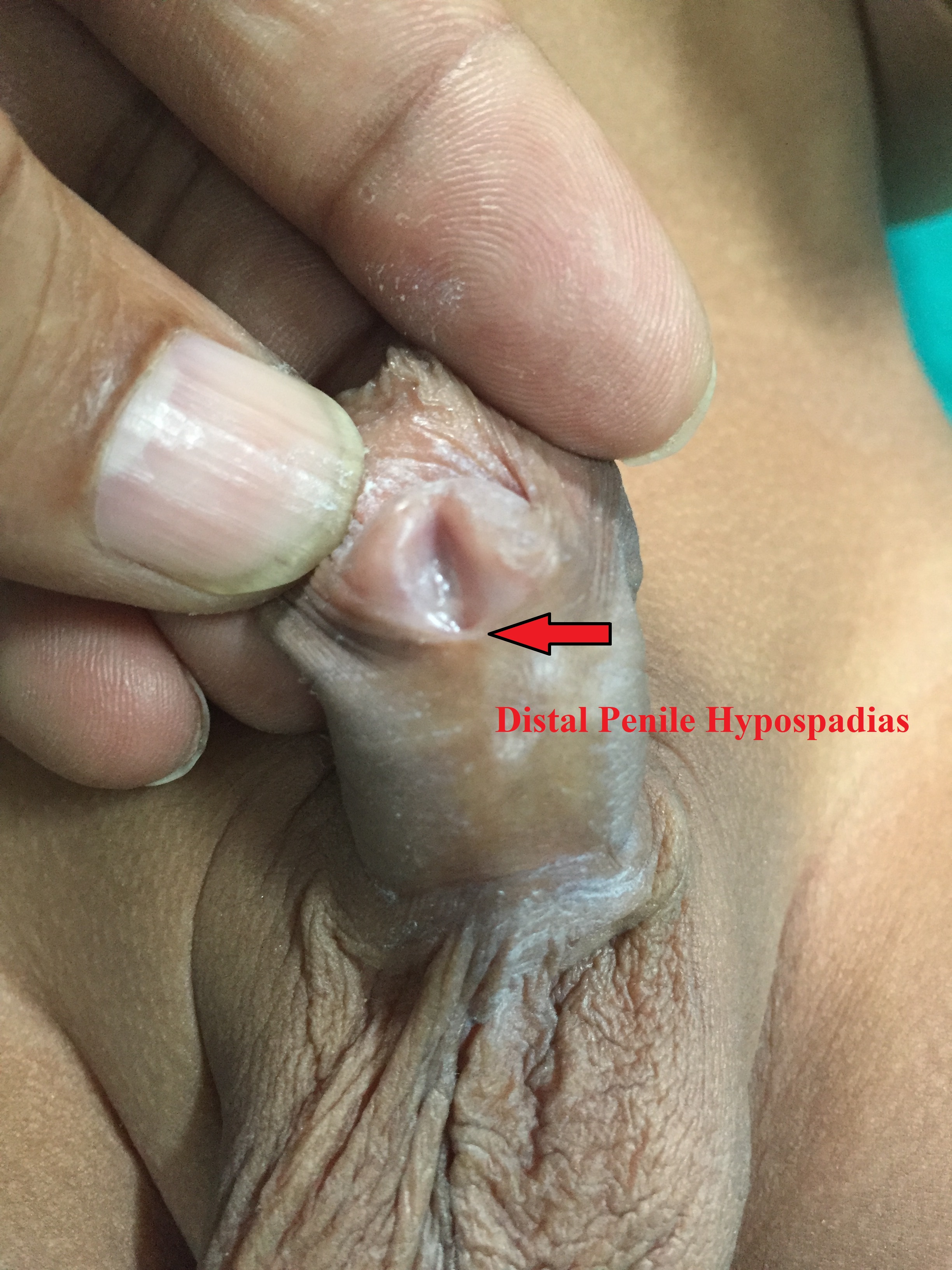
What is Hypospadias?
Hypospadias is a common structural difference of the penis where the urethra (the tube that carries urine from the bladder to outside of the body) is not at the tip of the penis. It can be located anywhere on the under surface of the penis to the scrotum. A condition called chordee is often seen with hypospadias. Chordee is a downward curve of the penis. This can occur with or without a hypospadias.
The types of hypospadias include:
- Distal or glanular: most common form when opening is found near the head of the penis
- Midshaft: when opening is found in the middle to the lower shaft of the penis
- Penoscrotal: when opening is found where the penis and scrotum join
- Perineal: when opening is behind the scrotal sac. These are the most severe forms of hypospadias and are less frequently found.
Causes
The exact cause of hypospadias is unknown. There are many factors believed to be involved in its development. Genetics, the environment and hormones may be factors that influence the development of this structural difference.
Signs and Symptoms
Usually, hypospadias is noticed at birth. Along with the misplaced opening, the foreskin is often incomplete and forms a hood. This is called a dorsal hood. However, some newborn boys have uncommon foreskin with a normal positioned urethral opening.
Some boys with mild forms of hypospadias can have no symptoms from their hypospadias.
If the hypospadias and/or chordee is not repaired, your child may have these issues as he grows:
- His urine stream may be hard to direct and control
- The penis may curve as he grows causing sexual dysfunction later in life
- If the urethral opening is not at the tip of penis, he may have fertility problems later in life
Treatment
No medicine will correct a chordee or hypospadias, and the child will not outgrow these conditions. Surgery may be recommended, and surgical outcomes are improved when performed by an experienced paediatric urologist.
The goals of the surgery are:
- To bring the urethral opening to the tip of the penis to allow a controlled stream of urine while standing
- To straighten the penis (if a chordee is present) to minimize the risk of painful intercourse
At birth, it is not recommended your child undergo a circumcision because the foreskin may need to be used for the surgical repair. A paediatric urologist may recommend hypospadias surgery between 12-24 months of age. However, the surgery can be done at a later age.
In more severe forms of hypospadias surgical repair may need to be done in multiple stages. Most hypospadias surgeries may create a penis that functions well for urinary and sexual purposes.
Surgery
The surgery is done while the patient is asleep, under general anaesthesia. Sometimes, the surgeon may prefer that the child not urinate through the repaired urethra during the first few days. A small plastic tube, called a catheter, is anchored to the head of the penis with stitches. This allows the urine to flow out without coming into contact with the repair. This tube is removed in seven to 14 days without causing the patient much discomfort.
A dressing is wrapped around the shaft of the penis at the end of the surgery. This will help reduce the expected swelling and make your child more comfortable.
Your child will get antibiotics (medicine that will kill bacteria) and may get a medicine to stop bladder spasms.
Hypospadias surgery may be very successful, but there are some potential complications. In some cases, a hole or a fistula may occur and urine may leak through the hole. The urethra would need more surgery to repair this. Scarring within the urethra may occur and cause the urethra to narrow. This may interfere with the passage of urine and would also need to be corrected with surgery.
Patients may need to return for checkups until after puberty.
Call Your Child's Doctor If:
- Your child can't urinate (pee) or has trouble urinating
- Your child has severe pain or bladder spasms that can't be controlled with medicine
- Your child has a fever of 101° or higher during the week after surgery
- Your child has vomited more than three times and can't keep liquids down
- The black stitches in your child's stent (tube) become dislodged or fall out